A large-scale Webflow build for one of neuroscience's most-used research platforms
Brain-map.org is a working research environment for neuroscientists, graduate students, and software developers worldwide. The Allen Institute came to us ready to build a platform where scientists could move from inquiry to application without ever leaving the research environment. This is how we built it on Webflow.

Allen Institute for Brain Science
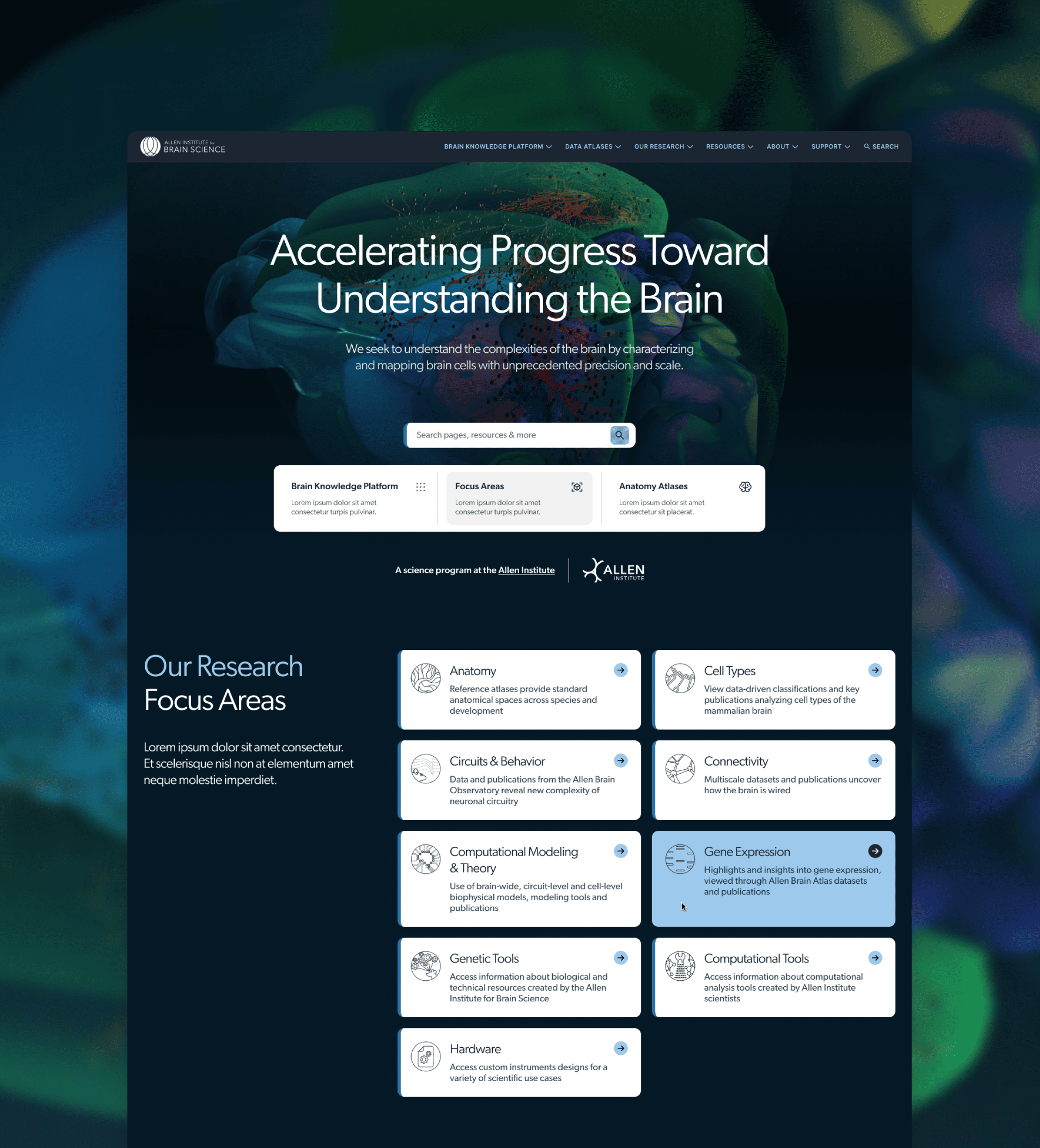
The approach
What brain-map.org needed to become
The Allen Institute had spent years building some of the most comprehensive open neuroscience datasets in the world. Scientists relied on the site daily to find and apply that work, across cell type taxonomies, anatomy atlases, genetic tools, and machine learning applications, serving audiences ranging from senior investigators to software developers building their own neuroscience tools. The Brain Knowledge Platform, the Institute's integrated scientific workspace, was ready to grow alongside that demand.
Project highlights
- 🌐 Webflow Enterprise
- 🤔 Complex Category
- 🔍 Improved Navigation
- 👥 User-Centric
- 📃 Tons of Pages
Gigantic’s ability to quickly deep dive into a new subject matter and audiences is remarkable, especially in the scientific field, and set a solid foundation for our project. They took the time and care to understand our vision and the end user needs driving the project. Their curiosity and questions really helped us peel back all layers of the onion brain and get to the bottom of what we wanted to do, for whom, and why. Their highly iterative design approach for infrastructure, content, and information architecture brought abstract concepts to life. Throughout, they took feedback with grace, communicated effectively, and embraced the process with a can-do attitude. In the end, they managed to go beyond MVP and hit several stretch goals while delivering on time and on budget. This was partially due to their hands-on approach during the content migration and polish phase. The final websites are beautiful, the information well-organized, and the Webflow implementation robust and sustainable. Lastly, they approached the engagement not like a one-and-done project and instead were mindful of future needs. We’re excited to continue working with Gigantic going forward.

A user experience built for the researchers and scientists who use it
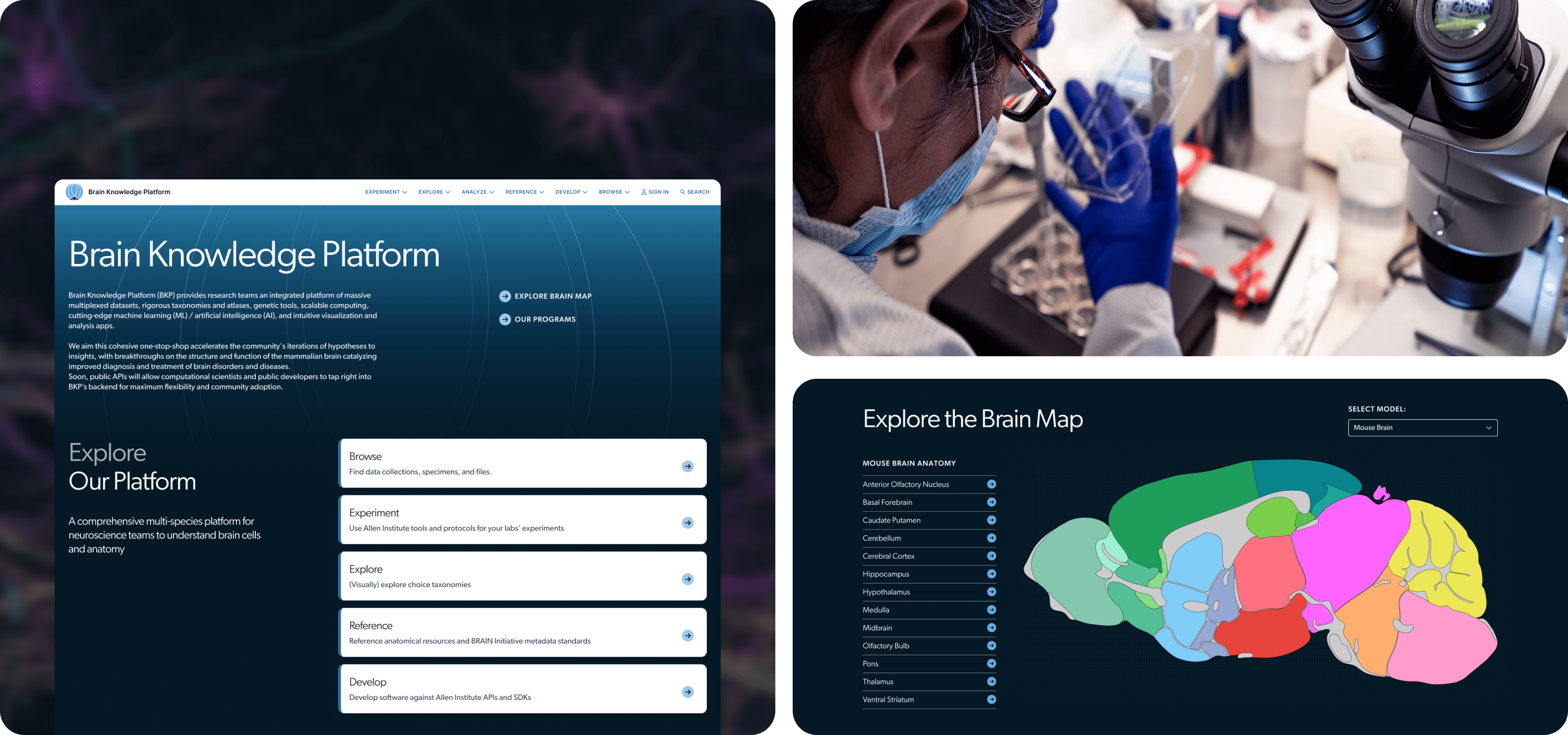
The brief was straightforward in principle: a user who arrives with a specific goal should never have to leave for Google. Getting there required a fundamental shift in how the site was organized. Rather than sorting content by who you are, we worked hand in hand with the Brain Science team to structure the site around what scientists are trying to do. Top-level navigation categories (Browse, Experiment, Explore, Analyze, Reference, Develop) reflect scientific intent rather than departmental structure. Robust faceted search and dense internal cross-linking let researchers navigate in their own terminology rather than the Institute's.
Unifying two scientific platforms on Webflow
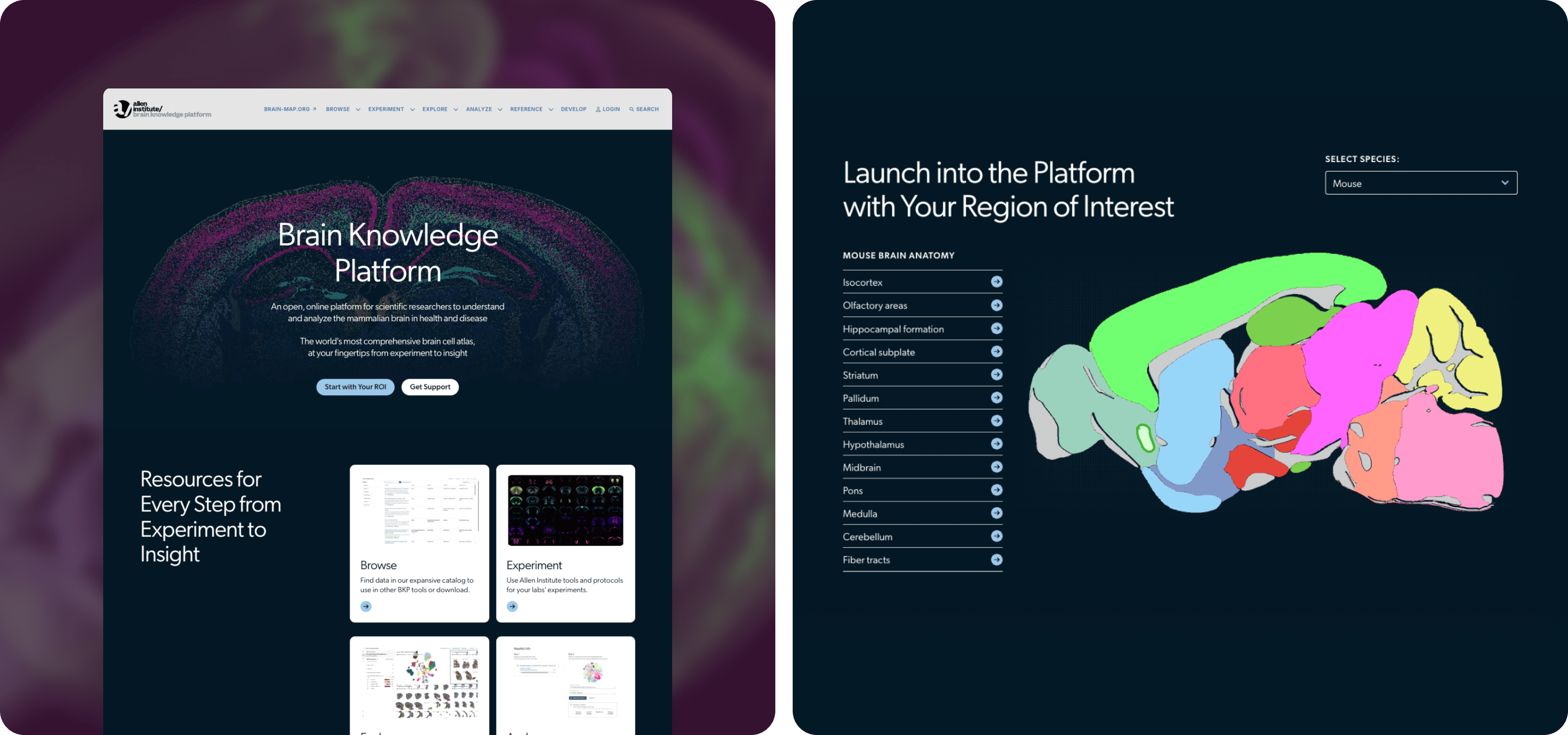
The deeper structural challenge was the relationship between brain-map.org and the Brain Knowledge Platform (BKP) itself. The BKP is a sophisticated workspace where researchers run analyses and explore datasets directly. Brain-map.org needed to serve as its front door: orienting visitors and moving them into the platform without exposing the seam between the two systems.
Webflow components to empower non-technical teams
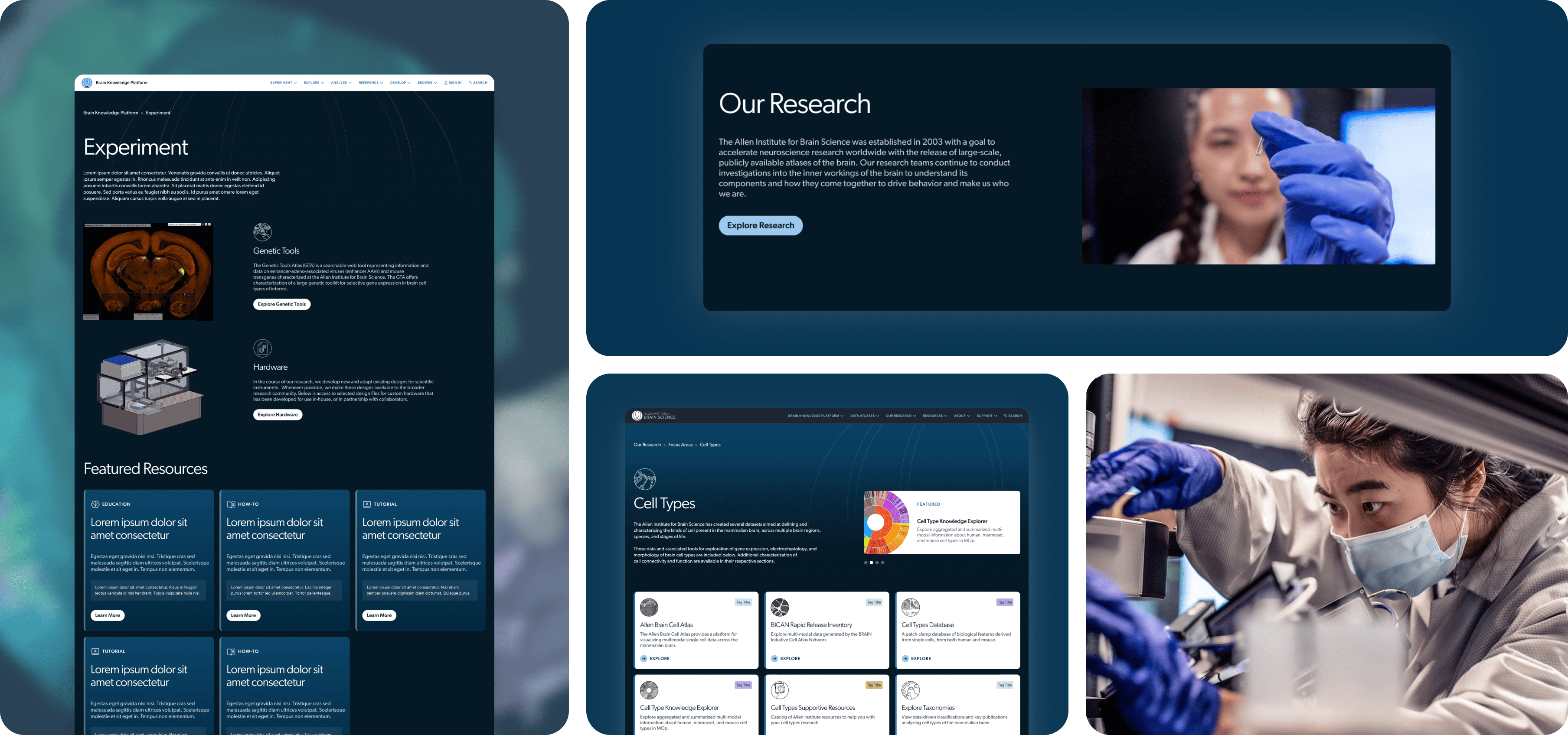
The Webflow build included a component-based design system that a non-engineering team can maintain and evolve, with semantic HTML and structured metadata on every page to support the AI-assisted navigation features the Institute is building next. The project delivered on time and on budget, hitting stretch goals the team had initially scoped out, and laid the foundation for the additional Allen Institute Webflow sites that followed.
Measurable growth in a historically slow period for neuroscience research
Recognized as a Webby Honoree following launch, brain-map.org grew active monthly users 14% year over year in the first 60 days post-launch, up from 8% YoY in the 60 days prior, a window that falls during one of the slowest periods on the research calendar, making the lift more meaningful than the number alone suggests.
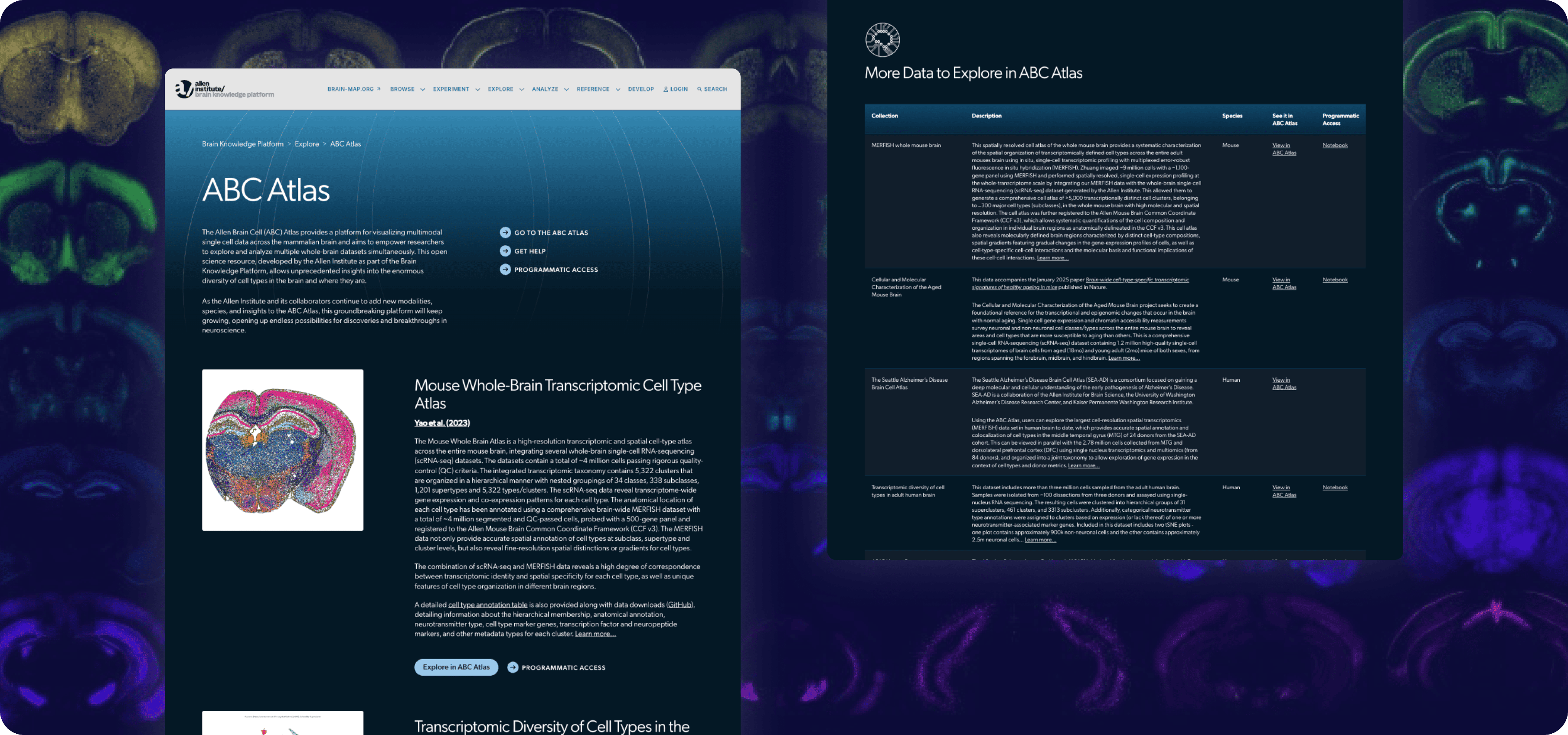
Webflow website strategy for bioscience and research organizations
If your organization manages a large, complex body of scientific or technical content for a demanding audience, and the gap between what you offer and what users can find is real, we would like to talk. We work with bioscience institutions, research organizations, and data-intensive companies on exactly this kind of problem.
Working on a website strategy or Webflow build in the bioscience or research space? Let's Talk.



Have a project or problem to solve? Let’s get started.
Working with Gigantic was inspiring and impactful. Given the nature and timeline of this project, our company needed a collaborative and nimble partner—not just one who lists those qualities as bullet points in a capabilities presentation, but a partner who actually exhibits them day in and day out. Gigantic worked with our team to create and implement design decisions in real-time and, like any true partner, asked great questions and challenged us which has only benefited our company as a whole.

Working with Gigantic was inspiring and impactful. Given the nature and timeline of this project, our company needed a collaborative and nimble partner—not just one who lists those qualities as bullet points in a capabilities presentation, but a partner who actually exhibits them day in and day out. Gigantic worked with our team to create and implement design decisions in real-time and, like any true partner, asked great questions and challenged us which has only benefited our company as a whole.